

The Valley of Flowing Gold
CCP uses AI animation and a Chow Bros style to mock Trump and promote its One Belt One Road initiative
China Central Television (CCTV) is China’s national television broadcaster — and the Publicity Department of the Chinese Communist Party. In this case, they deserve a raise.
“White Eagle and Persian Cat: Chronicles of Love and Hate in the Valley of Gold” is a brilliant piece of propaganda. It wraps a genuinely clever geopolitical argument inside a beloved 1970s Chow Brothers Kung Fu format with cute anthropomorphic characters — and it works.
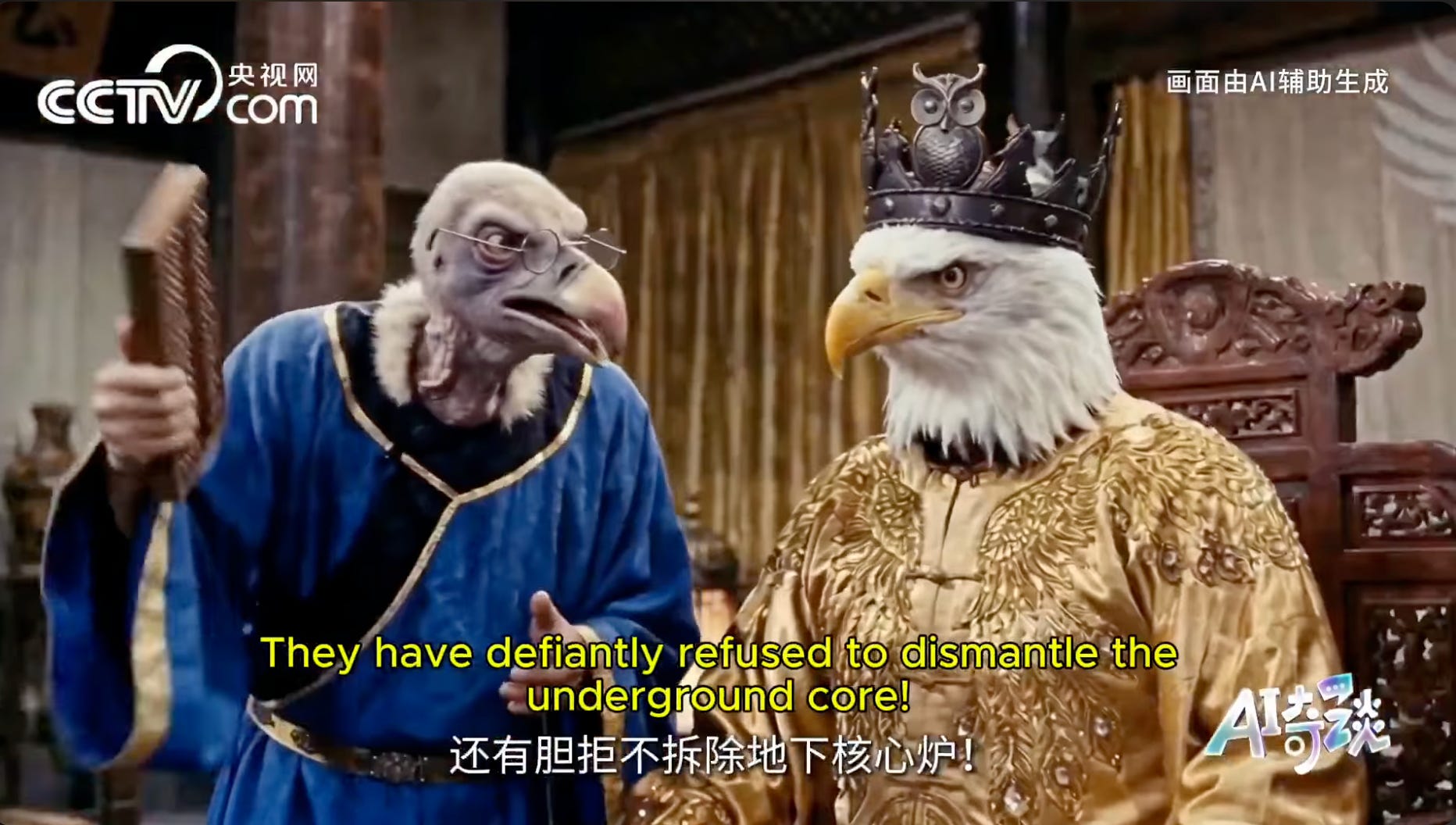
The eyeglass-wearing vulture-headed adviser (Stephen Miller) is informing the White Eagle King (Donald Trump) that the Persians are refusing to dismantle their underground core — that is, their nuclear enrichment facilities. The time to act is now.
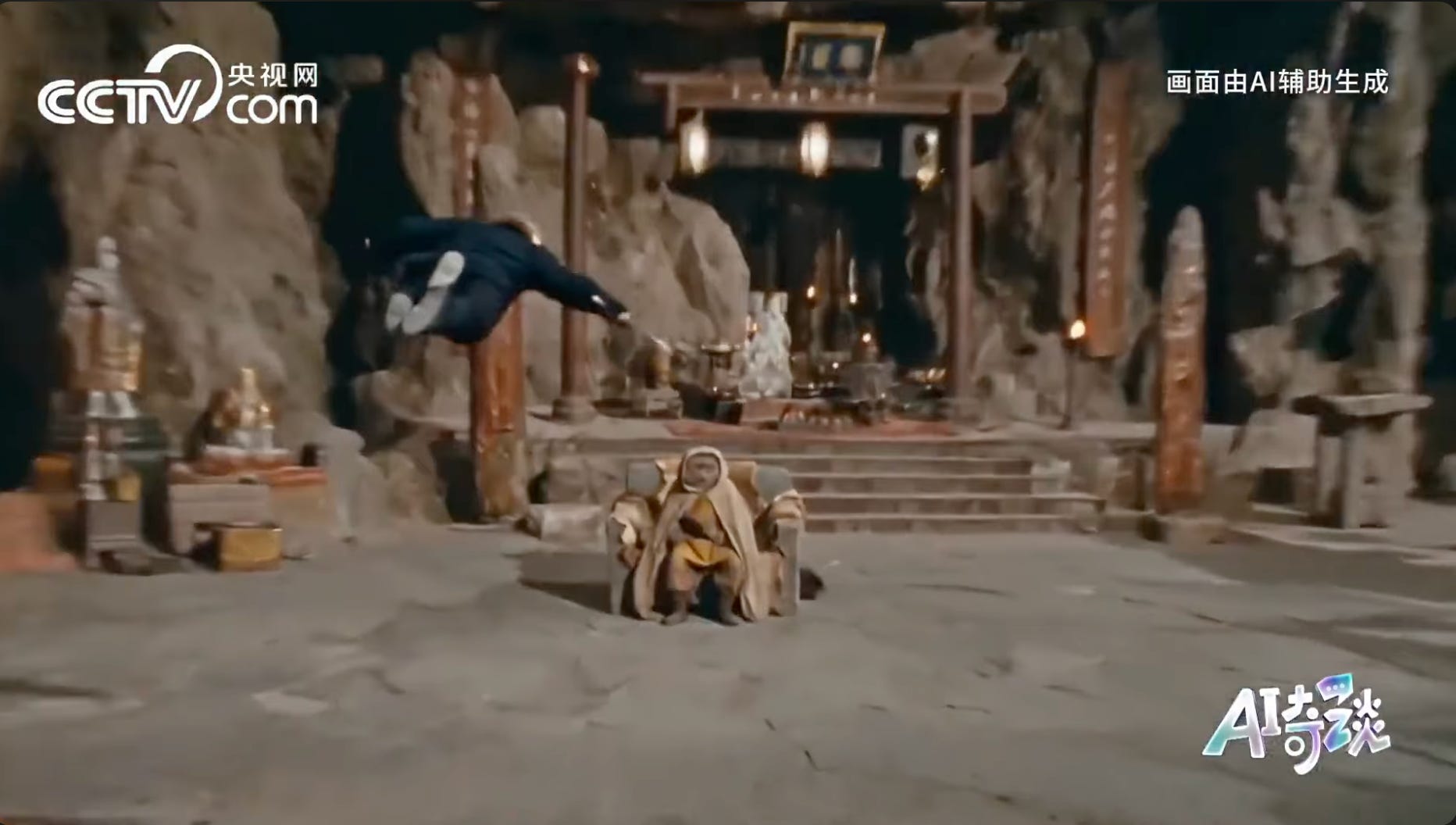
An assassin flies through the air, sword extended, and kills the Persian cat leader.
The Eagle King’s adviser, now panicked, delivers the post-strike math:
“I just did the maths. Their wooden birds cost at most two taels of silver, but each golden arrow we shoot costs at least 100 taels. This is not war! This is feeding our treasury to the dogs!”
The King’s reply: “You shut up. How can a White Eagle be frightened by a few broken pieces of wood? Keep shooting until he has no wood!”
The king escalates. A school filled with Persian kittens is killed, vengeance is sworn, and a blockade of the only trading channel is initiated.
The Chamber of Commerce (NATO) is called upon to intervene and force the Persians to reopen the trade route. Instead, the Chamber discovers the old Silk Road — and while it may take a few extra days, it’s stable and reliable.
“Let’s find new allies and take a new path,” says a Chamber member riding through the desert.
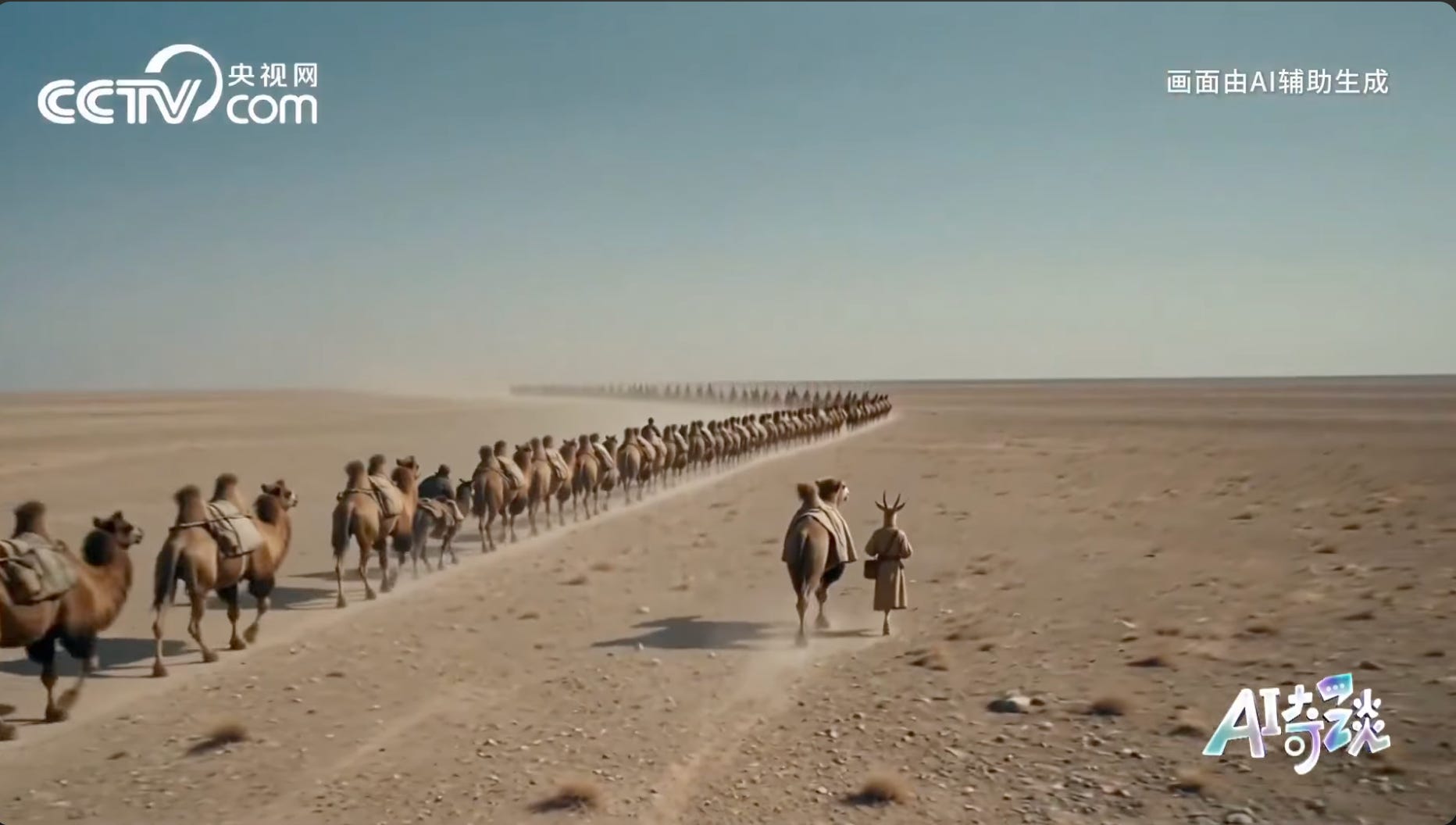
The video closes with a slogan — a bastardization of Sun Tzu's principle of winning without fighting: "The art of war is not in the fighting, but in the stopping."
I’m sharing this because it illustrates something worth paying attention to: AI is now capable of generating emotionally resonant, strategically targeted narrative content drawn from current events in near real time. This isn’t a curiosity. It’s an information environment capability.
Storytelling and warfighting have always been inseparable. Done well, narrative shapes perception, builds will, and wins. Done poorly, it becomes a liability that turns on you. The CCP clearly knows this.
If that intersection interests you, join me and more than 100 colleagues from the worlds of national security and entertainment at the Whitefish Security Summit, April 2–4 in Whitefish, Montana.