

Russians at Bushehr: The Accidental Tripwire in Operation Roaring Lion
How 700 Rosatom Engineers Became Operation Roaring Lion's Most Dangerous Variable
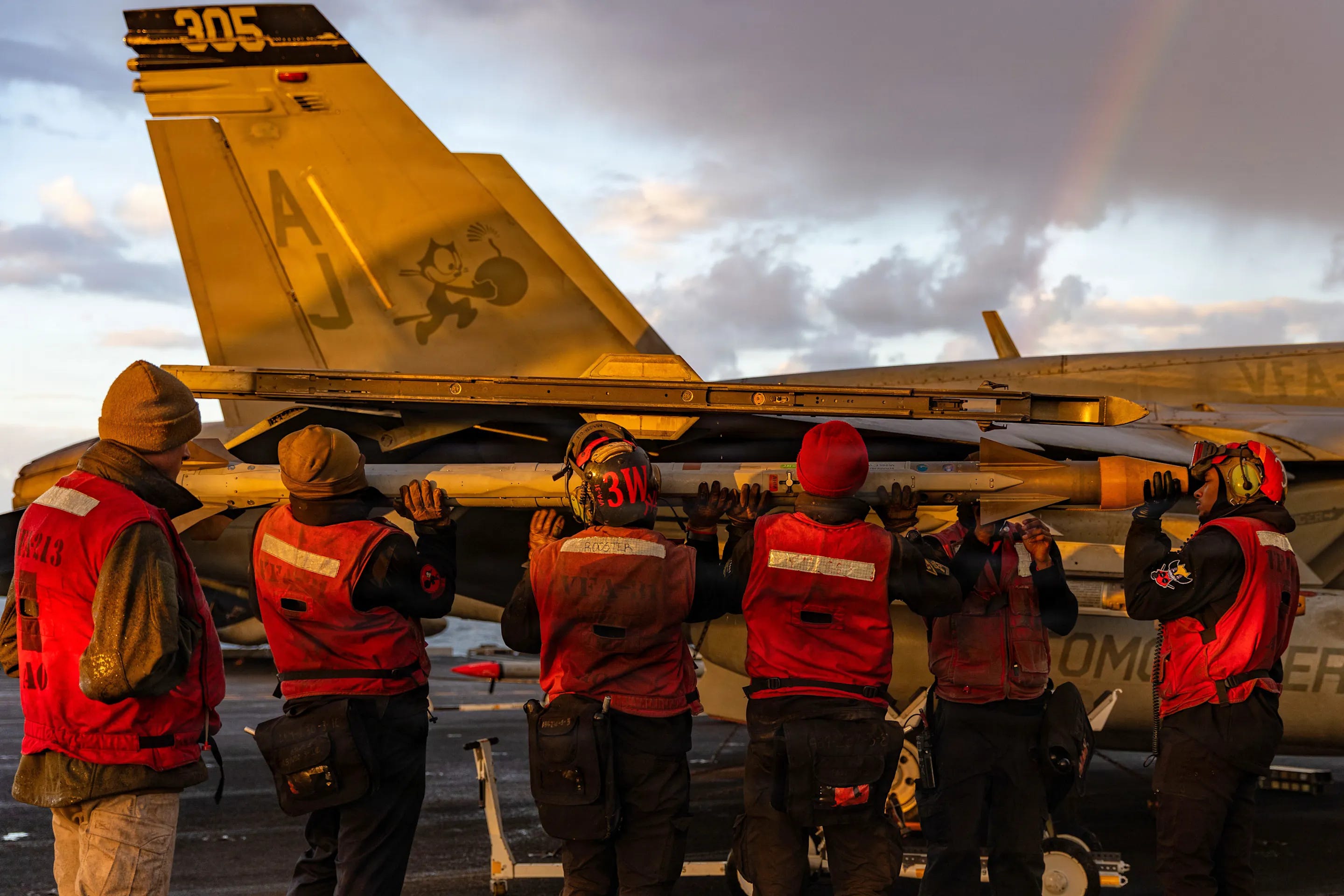
With no evidence of an imminent threat to support a preemptive strike against Iran, and the President’s refusal to provide same, President Trump, National Security Adviser Stephen Miller, Secretary of Defense Pete Hegseth, and Director of National Intelligence Tulsi Gabbard have recklessly put the U.S. at risk for expanded hostilities to include the Russian Federation. This brain trust may have just handed Vladimir Putin the pretext he never had to move from the sidelines to the field. Seven hundred Rosatom engineers are still at Bushehr. That's not a footnote. That's a tripwire, known in forecasting terms as an “accidental entanglement.” And nobody in this administration appears to have thought seriously about what happens if we trip it.
How Likely is Entanglement?
To answer that question, I looked at the target list, and ran that through Anthropic’s Claude to determine how many Rosatom employees might be present at each. Here are the results.
Bushehr Nuclear Power Plant — HIGH Rosatom presence, CONFIRMED
About 700 Russian specialists were taking part in construction of the second and third units at Bushehr, out of roughly 3,000 total specialists on site.
The port city of Bushehr was struck, though it remained unclear whether the nuclear reactor sustained damage.
Rosatom subsequently evacuated 94 non-essential personnel — children and family members — but confirmed its essential staff remained at the plant.
Isfahan Nuclear Technology Center — MODERATE Rosatom presence likely
Isfahan was struck in both the June 2025 Operation Midnight Hammer and again in the February 28 operation. Isfahan was among the cities targeted in Operation Roaring Lion, with nuclear-related sites taking hits. Isfahan has historically hosted Russian technical cooperation on reactor fuel conversion and research. It is less exclusively a Rosatom facility than Bushehr, but Russian technical advisors involved in fuel cycle cooperation and reconstruction monitoring after the June strikes would plausibly have been present. Probability of Rosatom personnel on site: moderate, perhaps 30-40%.
Parchin Military Complex — LOW but non-trivial Rosatom presence
The Parchin military complex also took hits in the February 28 operation. Parchin is primarily an IRGC weapons development site — explosives testing, missile work, suspected nuclear weapons design research. This is not a Rosatom facility. However, Russian military advisors (distinct from Rosatom) have been documented at IRGC facilities. The probability of Rosatom engineers specifically at Parchin is low, but Russian defense personnel more broadly is a separate and higher-probability question. See the S-300 and S-400 missile banks below.
Fordow and Natanz — LOW current Rosatom presence
These were the primary enrichment sites. Fordow and Natanz were struck in the June 2025 Operation Midnight Hammer and were again targeted in February 2026. These are Iranian-run enrichment facilities with no significant Rosatom operational role. The probability of Rosatom engineers at these sites is very low. Russian nuclear scientists in an advisory or monitoring capacity is conceivable but unconfirmed.
Tehran — CONFIRMED small Rosatom presence
A small group of Rosatom staff working in Tehran had been concentrated within the grounds of the Russian Embassy following the strikes. Tehran targets included the Iranian Atomic Energy Agency headquarters, where Russian officials regularly visited. Whether any were present at the moment of the strike is unknown.
With essential Rosatom staff still at Bushehr, inside an active conflict zone, with the Strait of Hormuz closed and Iranian retaliation ongoing, those personnel are effectively hostages to the conflict’s trajectory. Putin has already used their presence as diplomatic leverage — warning Israel publicly before the strikes began. That lever now cuts both ways: it constrains Russian escalation (Moscow doesn’t want its people in a war zone) but it also gives Putin a legitimate grievance narrative if any Russian nationals are killed, accidentally or otherwise.
The Presence of Russian Defense Personnel at Iran’s S-300 and S-400 Air Defense Systems
Israeli forces destroyed or damaged many of Iran's air defense systems during the June 2025 Twelve-Day War, including its Russian-supplied S-300 long-range surface-to-air missile batteries. However, February 2026 satellite imagery reveals S-300 launchers positioned within prepared revetments near Tehran, suggesting Iran had retained or restored sufficient components to reconstitute at least portions of its long-range surface-to-air missile coverage, and it would need Russian assistance to do it.
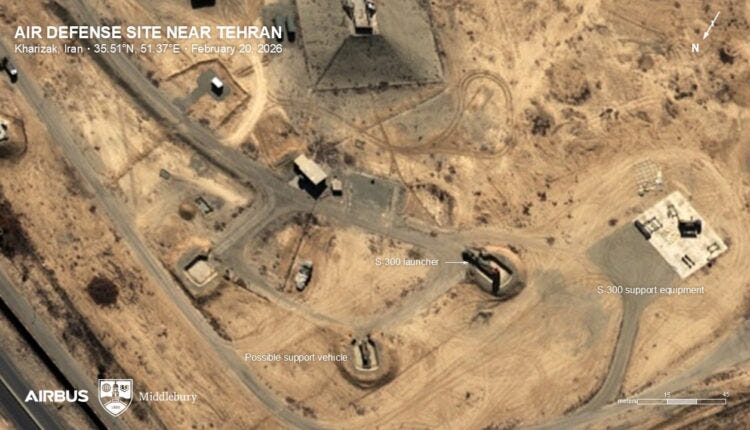
However, the presence of Russian technical personnel is probable but unacknowledged, undocumented, and unprotected by any prior diplomatic assurance. If U.S. or Israeli strikes hit a battery with Russian advisors present, there is no prior agreement to invoke, no public count of personnel to account for, and no established deconfliction channel to manage the aftermath.
Summary
There is a pattern here. Venezuela. Now Iran. With no confirmed imminent threat, no congressional authorization, and no deconfliction mechanism protecting hundreds of Russian nationals on the ground, the Trump administration has lit a fuse whose other end nobody can see. The world is watching — and what it sees is an America that has abandoned the international legal order it spent 80 years building. If this is the new doctrine, we should be honest about what it costs — starting with the very real possibility that the next casualty is a Russian engineer at Bushehr, and the phone call that follows goes to the Kremlin.
Do not expect people in power to do the right thing
Given a choice , Trump would not care for his own countrymen, no wonder Charlie Munger called him having qualities that make him unfit for the post.
What a fall for America .
Collateral damage a distinct possibility. Should have evacuated.